Ladder Pattern Damascus – Explained

English Handmade Knives often gets asked how this pattern is [...]
English Handmade Knives often gets asked how this pattern is achieved – we hope this helps to explain the question
Ladder is a distorted-layer pattern – a normal layered billet is needed, then its deliberately dented, flatten back out, and ground through the distortions. This is where the ground through the waves occur.
Starting with a high layer billet
1084/15N20 is the classic for contrast. You 150-300 layers – too low and the ladder looks blocky, too high and it gets muddy.
Then its Forge welded and drawn out to a flat bar, about 25-30mm thick x 35-40mm wide is a good starting shape for a knife bar.
Its kept it very flat and square.
The grooves are then made
This is where the pattern is formed. Transverse grooves across the bar, perpendicular to the layers.
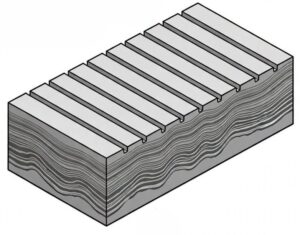
Two ways to do it
Hot pressed – the traditional way: Heated to a bright orange forging heat. Lay a piece of 12-20mm round bar crossways on top of your flat billet and its pressed down with a hydraulic press or power hammer with flat dies. Leaving a round-bottomed trough. Then move along and repeat every 20-25mm. The Depth is critical – about 40-50% of the bar thickness. Only press from one side for a clean ladder.
Cold ground: Maybe using an angle grinder with a thin cut-off wheel or a milling cutter to grind the same grooves. This gives a sharper, crisper rung than a pressed ladder.
The billet is kept straight – Dressing it back on the flat dies between presses.
Forging it flat again
Reheated and forging the bar flat with flat dies. Hammering the grooves back out. On the outside it looks flat again, but inside the layers are now wavy, dipping down where its been pressed.
This is the point where a skilled black smith can achieve the correct thickness
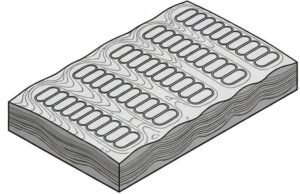
The Billet is then Ground
Surface grinding or hand grinding the grooved face flat. Removing metal intersecting the undulating layers. That intersection is the ladder.
Ground evenly, checked often. Then its normalised, finished and ground to a knife thickness, then etched in ferric chloride to reveal the pattern.
15N20 will stay bright, the high-carbon goes dark.
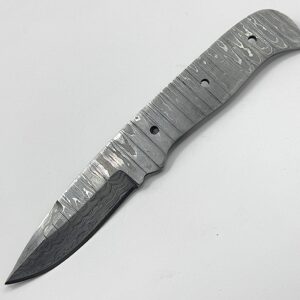
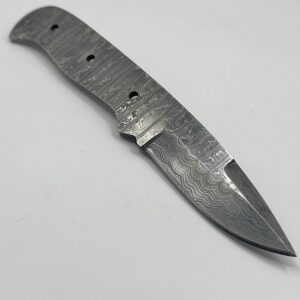
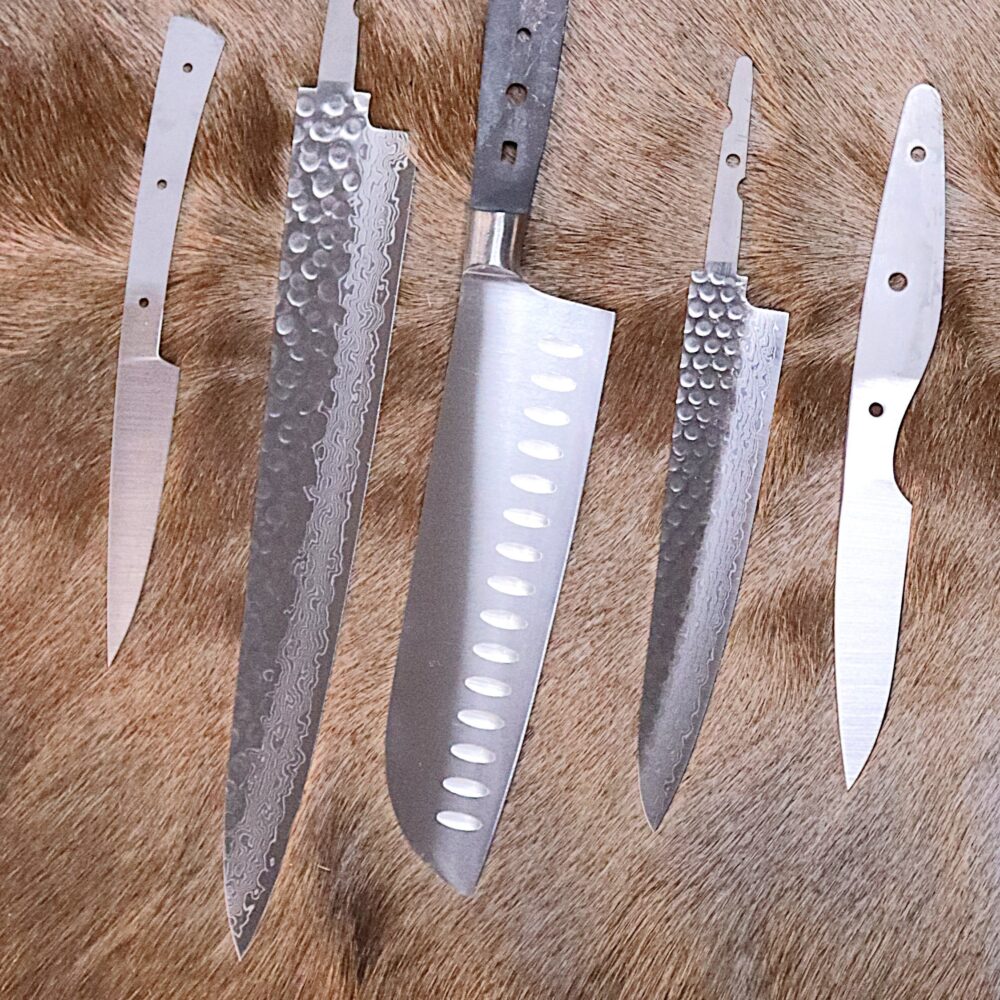
Fultang Outback Ladder Pattern Damascus with False Edge
Dimensions:
Length: 85mm
Overall length: 205mm
Blade Thickness: 4mm
Blade Material: Damascus Ladder Pattern. 1084 and 15n20 in simple double high carbon nickel steel having a hardness of 58-60 after tempering
Layers: 264
Grind: Scandi Slightly Hollow
Fixing: 3 Holes will accept Corby and Lovelace Bolts
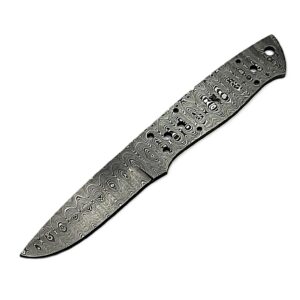
AE Huntsman 95
Blade length: 95 mm
Blade width: 26 mm
Blade thickness: 3,8 mm
Total: 210 mm
Steel: 1095/15N20
The drilling of fixing holes is then undertaken, bevelling and cutting to shape, with final stages of tempering.
Share This Article

Written by : Chris Matthews
Follow Us
Latest Articles

November 27, 2026
November 27, 2026
November 27, 2026